Places and Structures
The places somebody built and then left: Ancient Cities under the deep dark, Trial Chambers that still run without anyone in them, and Strongholds dug around a portal frame.
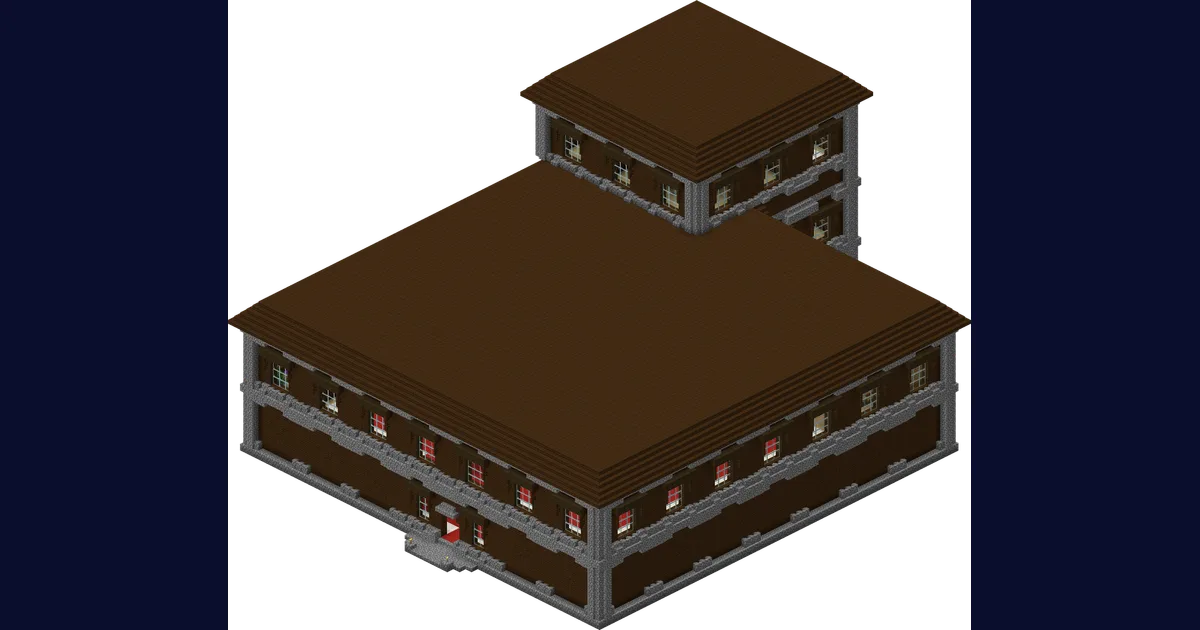
All 3 Places and Structures articles
Pick one to read. Every article opens with what the game shows and says where the evidence stops.
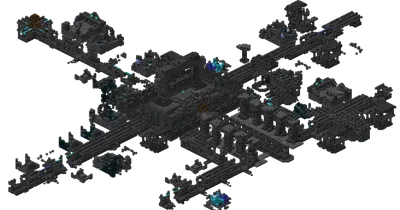

Ancient Cities and the Warden Backstory
The deep dark biome, the sculk network, and the Warden: what the Ancient Cities tell us about a lost civilization that dug too deep.
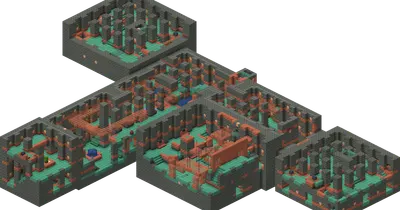

Trial Chambers and the Breeze
The mysterious Trial Chambers from update 1.21, the wind-based Breeze mob, and the automated challenge system left behind by unknown builders.
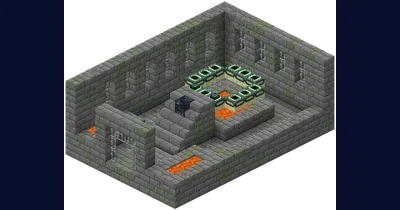

Strongholds: Purpose and Origin
Why do Strongholds exist? Who built them around End Portals, and what were they trying to protect -- or contain?
Three places in Minecraft were unmistakably built, and all three were left behind. An Ancient City under the deep dark, laid out symmetrically around a central structure and swallowed by sculk. A Trial Chamber of copper corridors whose spawners and vaults still work with nobody there to use them. A Stronghold, a maze of rooms dug underground around a single portal frame.
What makes these worth their own pages is not the loot. It is that a generated structure is an argument: somebody chose where the walls go, what a room is for, and what gets stored in it. The game never says who, and it never has to. The floor plan says enough on its own.
Read them together and the differences matter as much as the similarities. The Stronghold protects an exit. The Ancient City protects nothing and has no exit at all. The Trial Chamber is not a home but a machine, built to test whoever walks in and to keep testing them long after its builders stopped counting.
How to read a building nobody claims
Start with what a room is for. A Stronghold library holds bookshelves and a chest. That is storage and study, which means people who stayed. An Ancient City has furniture, wool and something that looks like a stage, but no beds you can use and no way out. That is a place built for gathering, and then abandoned in a hurry or drowned by whatever the sculk is.
Then look at what the builders defended against. Strongholds have silverfish in the walls and cells that read as prison rooms. Trial Chambers put the danger inside on purpose, wired to a spawner that resets. Nothing about either is decorative, and neither one is explained anywhere in the game.
Finally, look at the damage. A structure that generates broken was written to be broken, and the state it arrives in is a deliberate detail. The stone in an Ancient City is not eroded, it is overgrown, and the difference between those two words is most of what the deep dark is about.
One more thing separates these three from the rest of the map. A village, a desert temple or a mineshaft can be read as scenery: places that exist so the world does not feel empty. These cannot. A Stronghold is dug around an object that leads to another dimension. An Ancient City is buried under a biome that only exists where it is. A Trial Chamber is a designed test with a lock, a key and a reward table. Each one needed a decision about purpose before a single block was placed, and that is what makes them worth writing about instead of simply mapping.
It is also why these pages spend as much time on what is missing as on what is there. No inscriptions, no names, no bodies, no explanation of who left. Minecraft has added written material elsewhere, in pottery sherds and in the End Poem, and it has deliberately kept all of it away from the three structures where a reader would most want it.
Related from other categories
The articles on this page point at these, and they live elsewhere on the site.
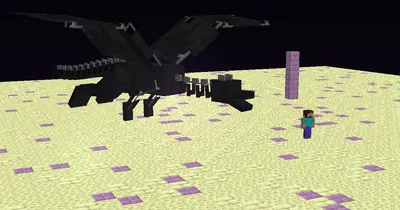
The Ender Dragon: Lore and Significance
Creatures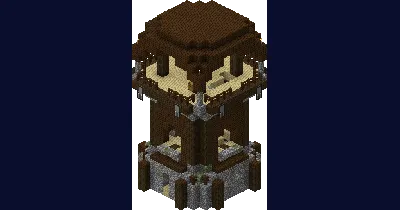
Pillagers and Illagers: A Fallen Civilization
Creatures
The Ancient Builders Theory
People and Myths
The Meaning Behind Minecraft's Music Discs
Objects and Texts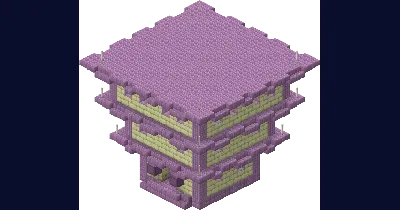
The End: Prison or Sanctuary?
Dimensions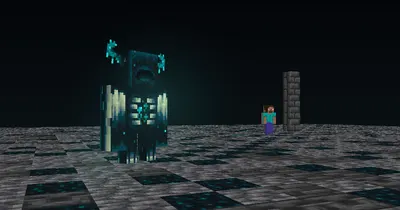
The Warden: Ancient Guardian of the Deep
Creatures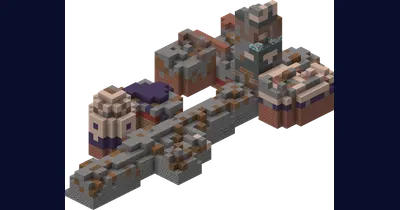
Archaeology: Suspicious Sand, Gravel, and Lost History
Objects and Texts
Other lore categories
- CreaturesEvery mob with a story behind it: bosses, the mobs whose origin is documented, the two peoples of the Overworld and the Nether, and the question of where hostile mobs come from at all.
- DimensionsThe Overworld, the Nether and the End as places with a history: what each one offers, what it costs to live there, and how the three are tied together.
- Objects and TextsThe objects whose rules only make sense as a story, and the writing the game leaves for you to read: the Dragon Egg, the Nether Star, ancient debris, pottery sherds, the music discs and the End Poem.
- People and MythsWho else was here. The lost civilisation the ruins imply, the identity of Steve and Alex, and the one figure the community invented and Mojang has denied for over a decade.
- TimelineA chronological reconstruction of Minecraft's lore events, from the earliest civilisations to the present day.


