The Ancient Builders Theory
The most popular Minecraft theory: a lost civilization built the Strongholds, Temples, and Nether Fortresses before vanishing. Where did they go?
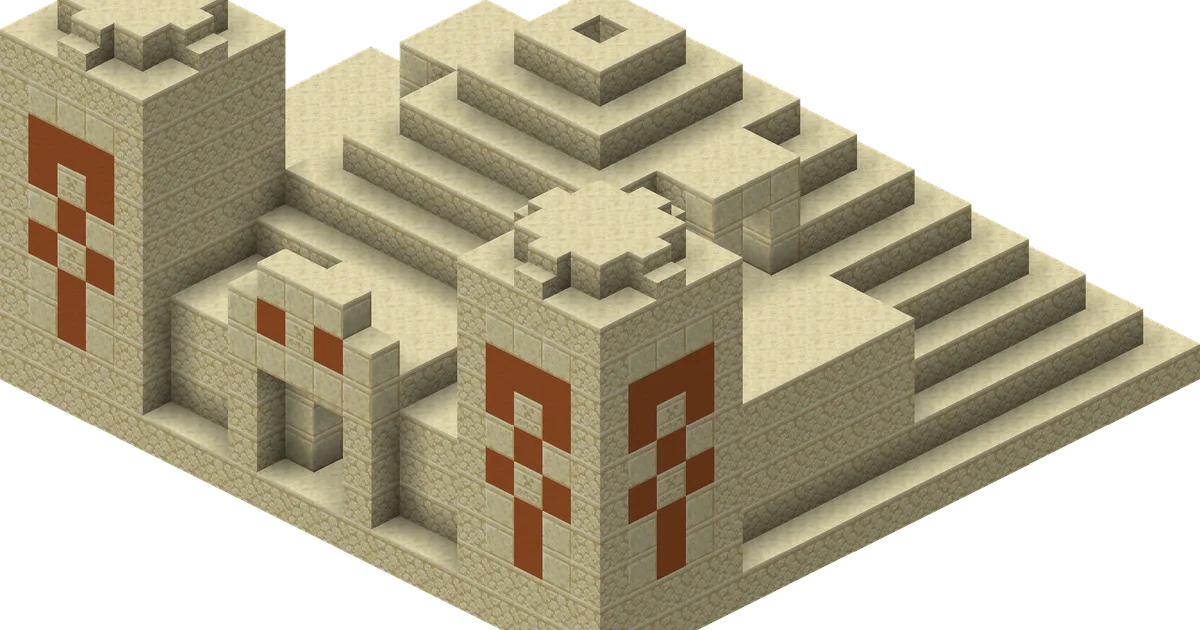
Across every dimension in Minecraft, there are structures. Strongholds buried underground. Desert Temples and Jungle Temples in the Overworld. Nether Fortresses spanning lava oceans. End Cities floating in the void. All of them are abandoned. All of them show signs of intelligent construction. And none of them have living builders. The Ancient Builders theory attempts to answer the most fundamental question in Minecraft lore: who built all of this, and where did they go?
Fan Theory - Not officially confirmed by Mojang
The Evidence
Start with the Overworld. Desert Temples contain TNT traps, pressure plates, and loot chests. Jungle Temples have lever puzzles and tripwire mechanisms. Ocean Monuments are geometric masterpieces guarded by Elder Guardians. Mineshafts extend for thousands of blocks underground. Villages dot the landscape, but Villagers do not build. They inhabit pre-existing structures and breed, but they never expand their villages or construct new buildings. Someone else built the world they live in.
Move to the Nether. Nether Fortresses are massive structures built from nether brick, a smelted material. Building them required gathering netherrack, smelting it into bricks, and constructing bridges across lava oceans. Bastion Remnants are even more complex, with dedicated housing, livestock pens, treasure vaults, and military quarters. The Piglins use these structures but, like Villagers, show no sign of building new ones.
Then the End. End Cities and End Ships contain Shulkers, Elytra, and valuable loot. The architecture uses purpur blocks and end stone bricks. These structures are clearly built, not generated. And they are empty of their builders.
The Theory
The Ancient Builders theory proposes that a single advanced civilization once existed across all three dimensions. They built the Strongholds as gateways between the Overworld and the End. They built Nether Fortresses as outposts in the Nether. They constructed End Cities as settlements in the End. They had mastery of redstone, architecture, and portal technology.
At some point, this civilization fell. The theory proposes several possible causes:
- The Wither: They discovered the Wither summoning ritual and unleashed something they could not control. The soul sand valleys of the Nether may be mass graves.
- The Sculk: They dug too deep, encountered the sculk network, and were consumed by it. The Ancient Cities are their last known settlements.
- Transformation: Those who fled to the End were changed by its energy, becoming the Endermen. This explains why Endermen appear in all three dimensions and make sounds that resemble distorted human speech.
- Zombification: Those who stayed in the Overworld became the zombies, skeletons, and other undead that now roam the surface. Zombies wear clothing. Skeletons wield bows. These are not random monsters. They are the remains of people.
Supporting Details
Several small details support the theory:
- Zombies and skeletons wear armor and carry weapons, suggesting they were once equipped soldiers or citizens.
- Igloos contain a hidden basement with a zombie Villager in a cell and a golden apple, as if someone was researching a cure for the zombie condition.
- The brewing stand recipe requires a Blaze Rod, meaning the builders had access to the Nether.
- Stronghold libraries contain books and enchantment materials, implying the builders were literate and practiced magic.
- End Cities contain brewing stands and enchanted items, meaning the builders brought Overworld technology to the End.
- The Dragon Egg, a unique trophy from a unique creature, sits atop the exit portal like a seal or marker.
The Player's Role
If the Ancient Builders existed, where does the player fit in? The player spawns in the Overworld with nothing, no tools, no knowledge, no context. They must rediscover everything the builders knew: mining, smelting, enchanting, brewing, portal construction. The game is a journey of rediscovery, retracing the steps of a lost civilization.
The End Poem supports this reading. The two speakers discuss the player as someone who has completed a great journey, who has dreamed their way through the world. If the player is the last of the Ancient Builders, or their successor, then the poem is a homecoming.
Mojang's Stance
Mojang has never officially confirmed or denied the Ancient Builders theory. However, they have consistently added content that reinforces it: the Deep Dark and Ancient Cities in 1.19, Trial Chambers in 1.21, and the ongoing expansion of Nether lore. Each update adds more abandoned structures, more evidence of past habitation, and more mysteries. Mojang may never confirm the theory directly, but they are clearly building a world where it fits.
More in People and Myths
The pages closest to this one first, including anything from another category that points here, and then the rest of People and Myths, the category this article belongs to.
Closest to this page
Enderman: Origin and Behavior Lore
 Enderman: Origin and Behavior Lore
Why do Endermen teleport? Why do they hate being looked at? And what is their connection to the ancient builders who may have become them?
6 min read
Strongholds: Purpose and Origin
 Strongholds: Purpose and Origin
Why do Strongholds exist? Who built them around End Portals, and what were they trying to protect -- or contain?
5 min read
Ancient Cities and the Warden Backstory
 Ancient Cities and the Warden Backstory
The deep dark biome, the sculk network, and the Warden: what the Ancient Cities tell us about a lost civilization that dug too deep.
7 min read
The End: Prison or Sanctuary?
The End is a barren void dimension with a dragon, Endermen, and empty cities. Is it a prison for the damned, a sanctuary for refugees, or something else entirely?
6 min read
Piglin Civilization and the Nether's Past
 Piglin Civilization and the Nether's Past
The Piglins are not just hostile mobs. They are the remnants of a sophisticated Nether civilization with trading systems, architecture, and social hierarchy.
6 min read
The End Poem: Analysis and Meaning
 The End Poem: Analysis and Meaning
A deep dive into the philosophical themes and hidden meaning behind Minecraft's End Poem, the credits sequence that plays after defeating the Ender Dragon.
7 min read
Trial Chambers and the Breeze
 Trial Chambers and the Breeze
The mysterious Trial Chambers from update 1.21, the wind-based Breeze mob, and the automated challenge system left behind by unknown builders.
5 min read
Pillagers and Illagers: A Fallen Civilization
 Pillagers and Illagers: A Fallen Civilization
The Illager faction -- Pillagers, Evokers, Vindicators, and Ravagers -- and what their structures tell us about a society that split from the Villagers.
6 min read
The Connection Between Dimensions
 The Connection Between Dimensions
The Overworld, Nether, and End are linked by portals, shared mobs, and parallel geography. Are they three parts of one world, or three separate realities?
5 min read
Why Do Mobs Exist? Creation Theories
 Why Do Mobs Exist? Creation Theories
Where do Minecraft's hostile mobs come from? From zombies that wear clothes to Creepers born from a coding mistake, exploring the origins of the game's creatures.
5 min read
The Meaning Behind Minecraft's Music Discs
 The Meaning Behind Minecraft's Music Discs
Minecraft's music discs tell a hidden story. From the haunting '11' to the mysterious '5', the discs contain clues about the game's deeper lore.
5 min read
The Overworld: What We Know
 The Overworld: What We Know
The Overworld is Minecraft's starting dimension -- forests, oceans, caves, and ruins. But beneath its familiar surface lies a world with a hidden history.
5 min read
The Creeper: From Coding Accident to Cultural Icon
 The Creeper: From Coding Accident to Cultural Icon
The Creeper was born from a bug -- a pig model with swapped dimensions. It became the face of Minecraft and one of gaming's most recognizable characters.
5 min read
Enderman Behavior: A Detailed Analysis
Why do Endermen carry blocks? Why do they hate rain? A close look at every quirk of Enderman behavior and what it might mean.
5 min read
The Iron Golem: Protector Lore
 The Iron Golem: Protector Lore
Iron Golems patrol villages, protecting Villagers from threats. But who taught the Villagers to build them, and why do Golems offer flowers to children?
4 min read
The Warden: Ancient Guardian of the Deep
 The Warden: Ancient Guardian of the Deep
The Warden is blind, deadly, and tied to the sculk network. It is not a boss to be fought but a force of nature to be feared.
5 min read
The Nether Star and the Wither Connection
 The Nether Star and the Wither Connection
The Nether Star is dropped only by the Wither. It powers the Beacon. The chain from soul sand to sky-beam is one of Minecraft's darkest crafting progressions.
4 min read
Ancient Debris and Netherite: Who Made It?
 Ancient Debris and Netherite: Who Made It?
Ancient Debris is not a natural ore. It looks manufactured, resists explosions, and produces the strongest material in the game. Someone made this. Who?
4 min read
Archaeology: Suspicious Sand, Gravel, and Lost History
Minecraft's archaeology system lets you brush away sand and gravel to uncover pottery sherds, armor trims, and relics. Each shard tells a story of the past.
5 min read
 Herobrine: Origin, Mojang Responses, and Cultural Impact
 Steve and Alex: Identity Theories
 The Ender Dragon: Lore and Significance

 The Nether: A Fallen Civilization