The Overworld: What We Know
The Overworld is Minecraft's starting dimension -- forests, oceans, caves, and ruins. But beneath its familiar surface lies a world with a hidden history.
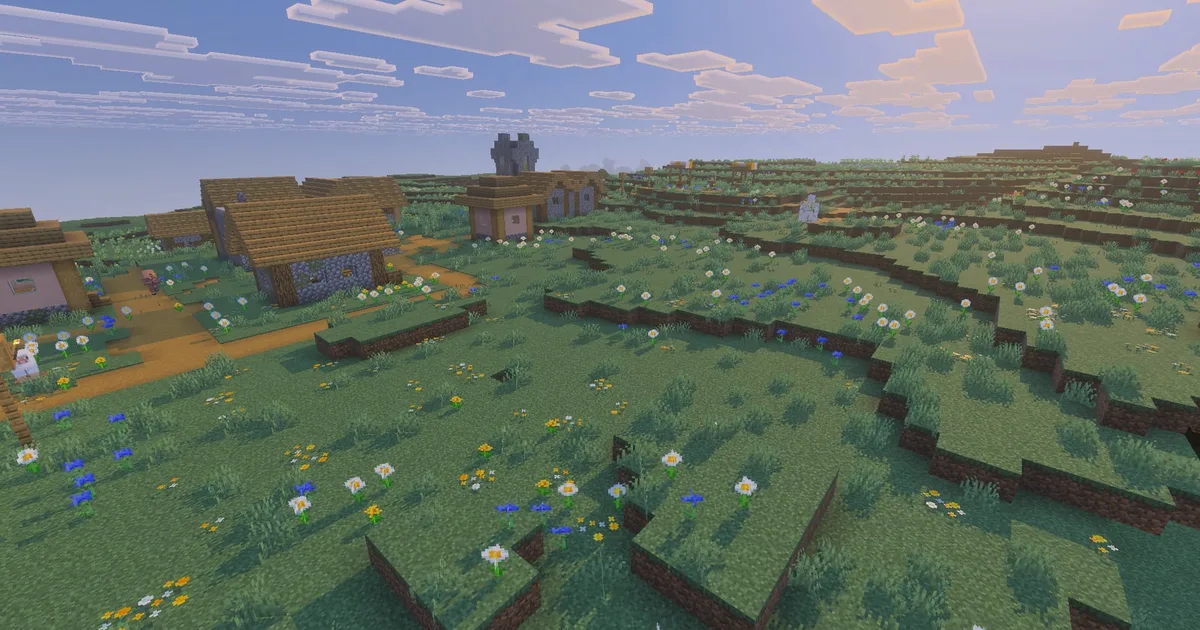
The Overworld is where every Minecraft journey begins. You spawn on the surface, surrounded by trees, grass, and sky. It looks natural, almost peaceful. But the Overworld is not untouched. It is littered with the remains of a past that the game never explains.
Surface Structures
Villages, Desert Temples, Jungle Temples, Pillager Outposts, Witch Huts, Ruined Portals, and Shipwrecks all generate on or near the surface. Each one tells a fragment of a story. Villages are inhabited but never expand. Temples are abandoned and trapped. Outposts are manned by hostile Illagers. Ruined Portals are broken gateways that someone once used to travel between dimensions.
The Ruined Portals are particularly significant. They generate in every biome, in the Overworld and the Nether both. They come in various sizes, from small frames to large, ornate structures. Many contain gold blocks and loot chests. Someone built these portals across the entire world, establishing a travel network between dimensions. And then they stopped.
Underground
Beneath the surface, the Overworld contains cave systems, Mineshafts, Strongholds, Dungeons, and (as of 1.19) Ancient Cities in the Deep Dark. The Mineshafts extend for enormous distances, with rail lines, support beams, and minecarts. This was industrial-scale mining. The resources extracted here fueled a civilization.
The cave systems themselves changed dramatically in the 1.18 Caves and Cliffs update. Lush Caves, Dripstone Caves, and the Deep Dark each represent different geological layers. The world extends down to Y-level -64, with the Deep Dark sitting at the very bottom. The deeper you go, the older and more dangerous things become.
Ocean Structures
Ocean Monuments are enormous prismarine structures guarded by Guardians and Elder Guardians. They contain gold blocks in their cores and sponge rooms in their upper levels. The architecture is geometric and alien, unlike any other structure in the game. Whoever built the Ocean Monuments was not the same culture that built villages or temples. The technology is different. The purpose is different.
Shipwrecks and Ocean Ruins dot the seabed, remnants of a maritime culture that once sailed these waters. Buried Treasure maps found in Shipwrecks lead to hidden chests. This implies a world where people traveled by sea, traded goods, and hid valuables. All of that activity has stopped.
The Day/Night Cycle
The Overworld runs on a 20-minute day/night cycle. During the day, hostile mobs burn in sunlight. At night, they spawn and hunt. This cycle is the defining feature of the Overworld experience: the constant push and pull between safety and danger, light and dark.
The hostile mobs that spawn at night (zombies, skeletons, spiders, Creepers) are not natural predators. They are remnants of something that went wrong. The Overworld is not a pristine wilderness. It is a post-apocalyptic landscape disguised as one.
More in Dimensions
The pages closest to this one first, including anything from another category that points here, and then the rest of Dimensions, the category this article belongs to.
Closest to this page
The Connection Between Dimensions
 The Connection Between Dimensions
The Overworld, Nether, and End are linked by portals, shared mobs, and parallel geography. Are they three parts of one world, or three separate realities?
5 min read
The Nether: A Fallen Civilization
 The Nether: A Fallen Civilization
The Nether is more than a lava-filled hellscape. It is a dimension with biomes, ruins, and a civilization that once thrived there before something went wrong.
6 min read
The End: Prison or Sanctuary?
 The End: Prison or Sanctuary?
The End is a barren void dimension with a dragon, Endermen, and empty cities. Is it a prison for the damned, a sanctuary for refugees, or something else entirely?
6 min read
The Ancient Builders Theory
 The Ancient Builders Theory
The most popular Minecraft theory: a lost civilization built the Strongholds, Temples, and Nether Fortresses before vanishing. Where did they go?
8 min read
 The End Poem: Analysis and Meaning
 The Ender Dragon: Lore and Significance
 The Wither: Origin and the Soul Sand Connection
 Trial Chambers and the Breeze
 Strongholds: Purpose and Origin